[ad_1]
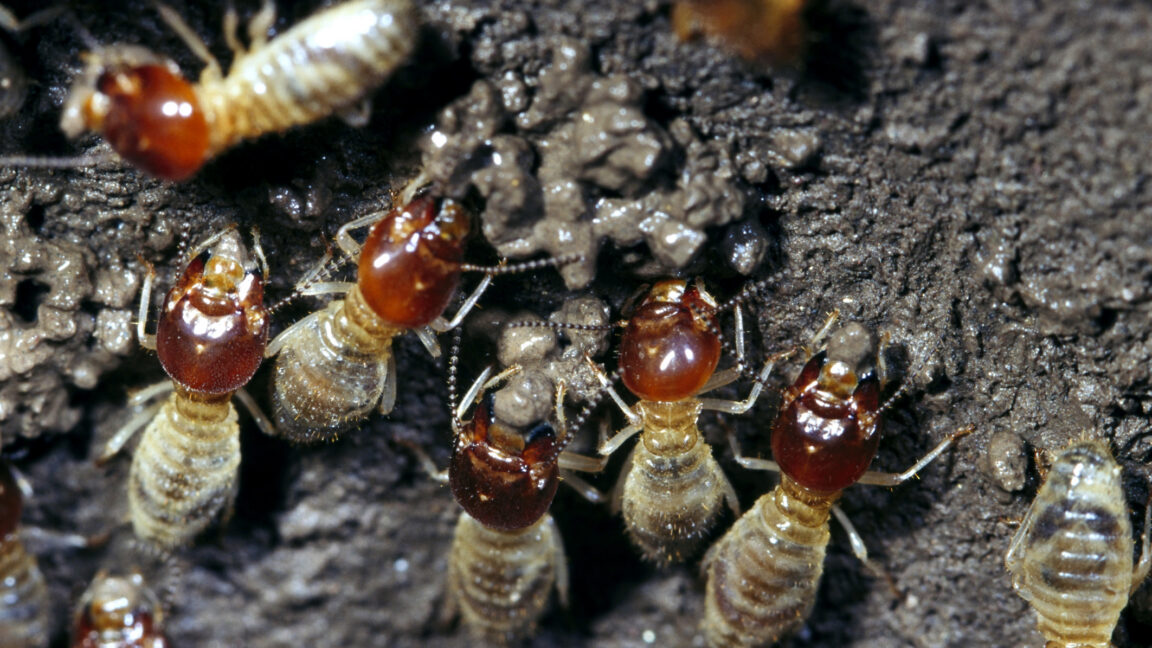
Odontotermes obesus is one of the termite species that grows fungi, called Termitomyces, in their mounds. Workers collect dead leaves, wood, and grass to stack them in underground fungus gardens called combs. There, the fungi break down the tough plant fibers, making them accessible for the termites in an elaborate form of symbiotic agriculture.
Like any other agriculturalist, however, the termites face a challenge: weeds. “There have been numerous studies suggesting the termites must have some kind of fixed response—that they always do the same exact thing when they detect weed infestation,” says Rhitoban Raychoudhury, a professor of biological sciences at the Indian Institute of Science Education, “but that was not the case.” In a new Science study, Raychoudhury’s team discovered that termites have pretty advanced, surprisingly human-like gardening practices.
Going blind
Termites do not look like particularly good gardeners at first glance. They are effectively blind, which is not that surprising considering they spend most of their life in complete darkness working in endless corridors of their mounds. But termites make up for their lack of sight with other senses. “They can detect the environment based on advanced olfactory reception and touch, and I think this is what they use to identify the weeds in their gardens,” Raychoudhury says. To learn how termites react once they detect a weed infestation, his team collected some Odontotermes obesus and challenged them with different gardening problems.
The experimental setup was quite simple. The team placed some autoclaved soil sourced from termite mounds into glass Petri dishes. On this soil, Raychoudhury and his colleagues placed two fungus combs in each dish. The first piece acted as a control and was a fresh, uninfected comb with Termitomyces. “Besides acting as a control, it was also there to make sure the termites have the food because it is very hard for them to survive outside their mounds,” Raychoudhury explains. The second piece was intentionally contaminated with Pseudoxylaria, a filamentous fungal weed that often takes over Termitomyces habitats in termite colonies.
[ad_2]
Source link


