Recent prisoner-of-war exchanges between Ukraine and Russia have brought emotional reunions and moments of relief for families who have waited years to see loved ones return, but behind those scenes of celebration lies a darker and increasingly troubling reality.
This week, Kyiv and Moscow completed one of the largest exchanges of the year, with around 500 prisoners returned to each side over two days, according to Ukrainian officials.
For Ukraine, every exchange represents a rare humanitarian breakthrough in a war now entering its fifth year. Many of the soldiers released were captured as far back as the 2022 siege of Mariupol and have spent years in Russian detention facilities.
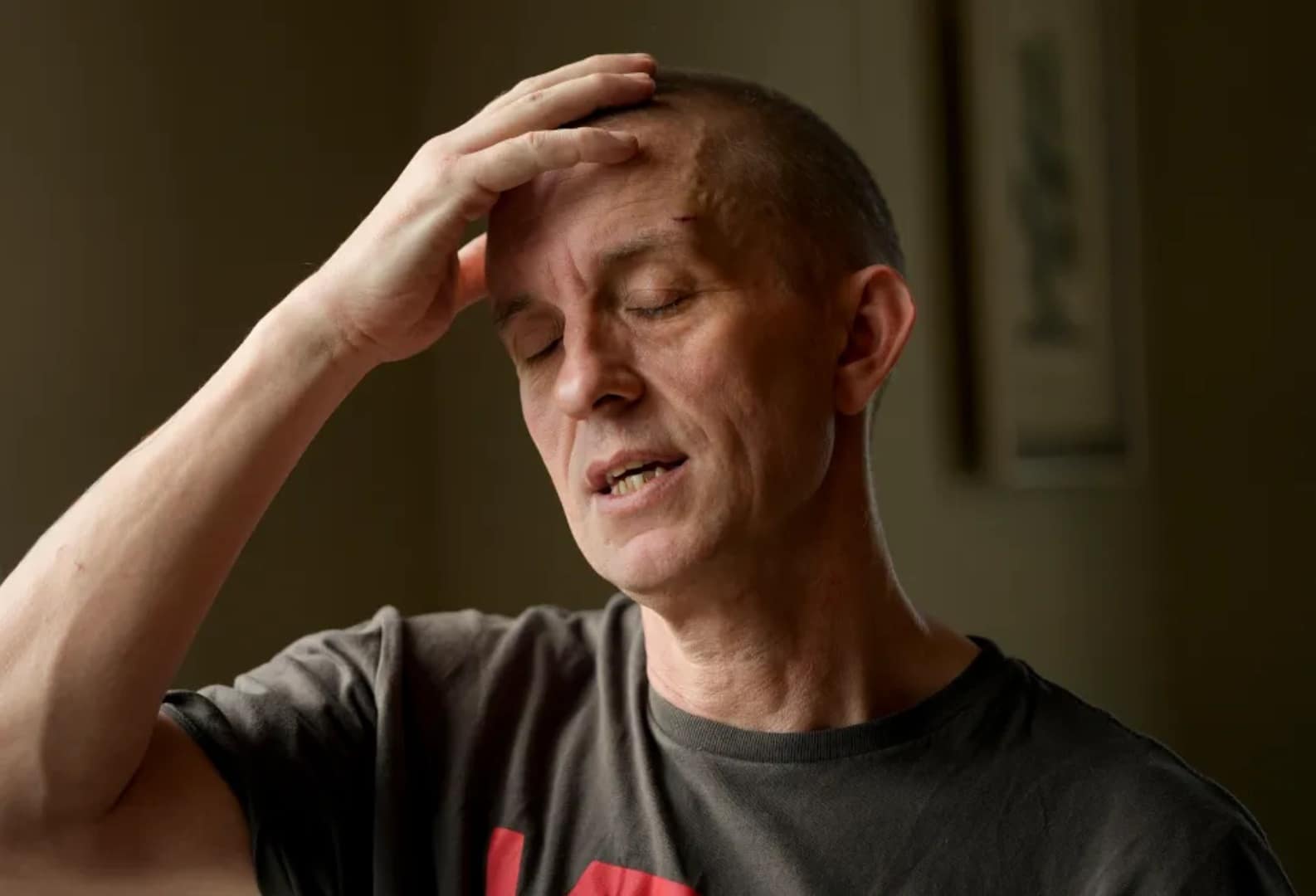
— First day after my exchange, finally safe back in the UK, six months after my initial capture.
Yet testimony emerging from recently released prisoners is raising serious questions about what many endured during captivity, and what may have happened in the final moments before they were handed back.
Human rights investigations throughout the war have repeatedly documented evidence of abuse in Russian-run detention centres. Certainly, from my own captivity, electrocution, beatings and starvation were used frequently. For 60 days, I was kept in a 1×3 isolation cell with no window, lights on 24 hours a day, and heavy metal music blaring, partly to disguise screams and the sound of incoming and outgoing artillery fire.
The United Nations Human Rights Monitoring Mission previously reported that the majority of interviewed Ukrainian prisoners described being subjected to torture or ill-treatment, including beatings, electric shocks, threats of execution and other forms of coercion.
Survivor accounts gathered over the past three years describe a system designed not simply to interrogate prisoners but to break them psychologically. Now, new allegations circulating following the latest exchange suggest the abuse may have continued until the very end.
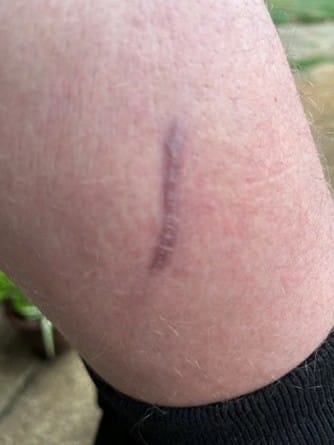
— During captivity, I was stabbed in the leg while being interrogated.
Ukraine’s Centre for Strategic Communications (StratCom Centre) warned this week that Russia continues to use prisoners of war in propaganda operations, raising concerns that some detainees may have been forced to take part in staged interviews or recorded statements before their release. My own experience lends weight to those warnings. Long before I ever reached what Russia claimed was a judicial process, my case had already been tried in the court of public opinion, amplified by state-run Russian media and fronted by Western-accented presenters. The narrative was clearly designed to justify Putin’s invasion and portray captured fighters as proof of Moscow’s claims.
Posts shared by Ukrainian officials on social media have amplified those concerns. Former Ukrainian Interior Ministry adviser Anton Gerashchenko noted reports that some returning prisoners claimed they were pressured to take part in interviews shortly before the exchange took place, raising further questions about the treatment of detainees in Russian custody.
The practice of broadcasting captured soldiers has been a recurring feature of Russia’s information war throughout the conflict. Videos of prisoners delivering statements or confessions have frequently appeared on state-aligned media channels and Telegram networks. More troubling still are allegations that third countries may now be indirectly involved in such propaganda efforts.
According to recently released Ukrainian prisoners of war, Hungary has been offering Ukrainian captives the possibility of release if they agree to participate in propaganda statements.
Prisoners of the Armed Forces of Ukraine from Zakarpattia, the western Ukrainian region bordering Hungary, were reportedly offered transfer to Hungary on the condition that they record videos criticising Ukraine while praising Russia.
According to recently released Ukrainian POW’s, Hungary is now working with Russia, offering Ukrainians in captivity a chance to be released if they agree to take part in propaganda statements.
Prisoners of war of the Armed Forces of Ukraine from Zakarpattia (region of Ukraine… pic.twitter.com/MI4dhMnZ6M
— SPRAVDI — Stratcom Centre (@StratcomCentre) March 6, 2026
Released Ukrainian prisoner Oleksiy Chorpita, speaking to the BreakTheFake project supported by Ukraine’s Ministry of Foreign Affairs, described such an offer while he was held in the Horlivka prison.
“In 2023, in Horlivka, in the prison where I was then held as a prisoner of war, a revealing incident occurred. I was offered to participate in an exchange, but to go to Hungary. I myself am from Zakarpattia,” Chorpita said.
According to him, the condition was clear.
“I had to record a video in which I would speak negatively about the Ukrainian authorities and positively about Russia, the conditions of detention and the prison regime.”
Chorpita refused.
“I refused to do this, and therefore did not get to the exchange.”
He was only released from captivity in 2025 and is now undergoing treatment in Ukraine.
Chorpita also warned that such videos are frequently produced under coercion.
“In most cases, they are an element of Russian propaganda, created under pressure or coercion. Publishing such videos in foreign media actually spreads Russian propaganda and supports its aggression.”
According to the StratCom Centre, Russia recently transferred two Ukrainian prisoners of war to Hungary. After arriving in Budapest, a Hungarian television channel broadcast footage in which the soldiers thanked their Russian captors for keeping them alive.
International humanitarian law is clear on the matter. Under the Geneva Conventions, prisoners of war must be protected from violence, intimidation and public humiliation, and they cannot be compelled to give public statements or be used for propaganda purposes.
For me, the allegations are credible. They reinforce long-standing concerns that detention facilities in Russian-controlled territory are being used not only for imprisonment but also as tools of psychological pressure and information warfare.
For the men returning home, however, the priority is survival and recovery.
Many arrive malnourished, injured and psychologically traumatised after years in captivity. Rehabilitation can take months, sometimes years. Their testimonies are increasingly forming a body of evidence that may one day underpin future war-crimes investigations, including my own. The prisoner exchanges themselves remain essential. Each swap brings hundreds of people home and offers hope to thousands of families still waiting for news.
Captive, Documentary

The dilemma of those not born in either Russia or Ukraine, choosing to fight for either state, also remains uncertain. The Kremlin appears to regard many of its own fighters as second-class citizens, relying on a patchwork of foreign recruits to sustain its war effort. Many Russian soldiers recruited from some of the poorest regions of the world remain languishing in Ukrainian POW camps, uncertain of their future. At the same time, exchanges appear to prioritise ethnic Russian prisoners.
But as more survivors begin to speak about what happened behind the walls of Russian detention facilities, the international community is confronted with an uncomfortable truth. The exchanges may bring prisoners home, but they are also revealing what many endured before they were finally allowed to leave, and the sheer number of prisoners still held means this issue is far from going away, I would say now, escalating.


