[ad_1]
Williams’ success with APX led him to create several games for Synapse Software, including the beloved Alley Cat and the incomprehensible fantasy masterpiece Necromancer, before moving to the Amiga, where he created the experimental Mind Walker and his ambitious “cultural simulation” Knights of the Crystallion.
Necromancer, Williams’ later creation for the Atari 800, plays like a fever dream—you control a druid fighting off spiders while growing magic trees and battling an undead wizard. It makes absolutely no sense by conventional standards, but it’s brilliant in its otherworldliness.
“The first games that I did were very hard to explain to people and they just kind of bought it on faith,” Williams said in a 1989 interview with YAAM (Yet Another Amiga Magazine), suggesting this unconventional approach started early. That willingness to create deeply personal, almost surreal experiences defined Williams’ work throughout his career.
After a brief stint making licensed games (like Bart’s Nightmare) for the Super Nintendo at Sculptured Software, he left the industry entirely to pursue his calling as a pastor, attending seminary in Chicago with his wife Martha, before declining health forced him to move to Rockport, Texas. Perhaps reflecting on the choices that led him down this path, Williams had noted years earlier in that 1989 interview, “Sometimes in this industry we tend to forget that life is a lot more interesting than computers.”
Bill Williams died on May 28, 1998, one day before his 38th birthday. He died young, but he outlived his doctors’ prediction that he wouldn’t reach age 13, and created cultural works that stand the test of time. Like Sam the Salmon, Williams pushed forward relentlessly—in his case, creating powerful digital art that was uniquely his own.
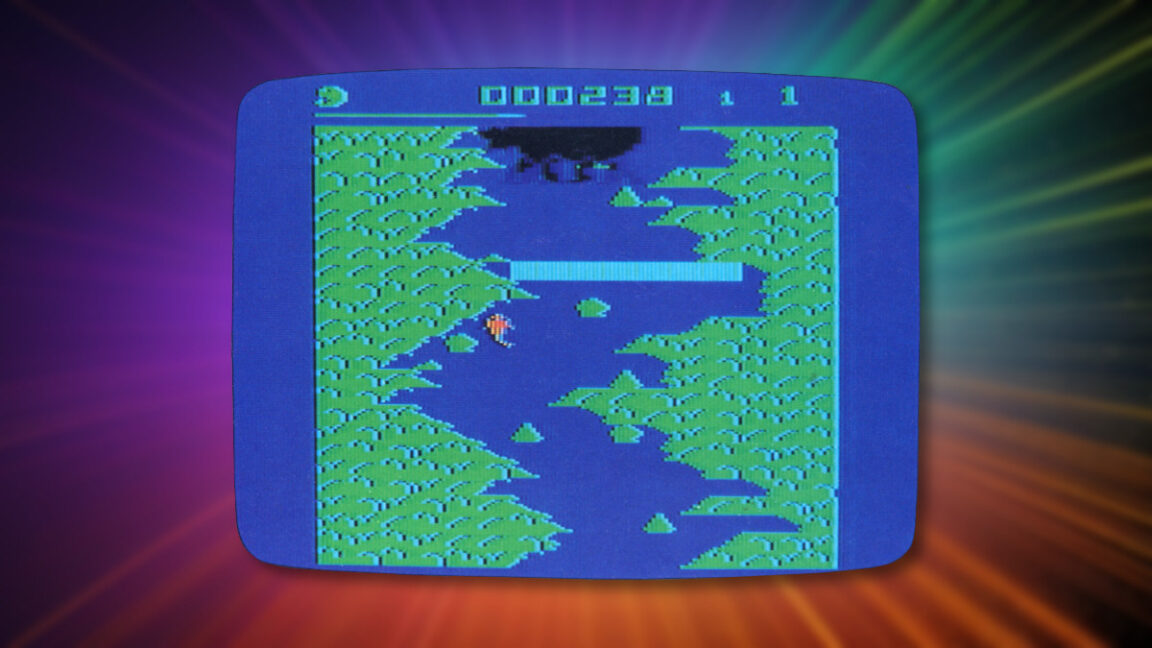
In our current era of photorealistic graphics and cinematic game experiences, Salmon Run‘s blocky pixels might seem quaint. But its core themes—persistence, natural beauty, and finding purpose against long odds—remain as relevant as ever. We all face bears in life—whether they come from natural adversity or from those who might seek to do us harm. The beauty of Williams’ game is in showing us that, despite their menacing presence, there’s still a reward waiting upstream for those willing to keep swimming.
If you want to try Salmon Run, you can potentially play it in your browser through an emulated Atari 800, hosted on The Internet Archive. Press F1 to start the game.
[ad_2]
Source link


