[ad_1]

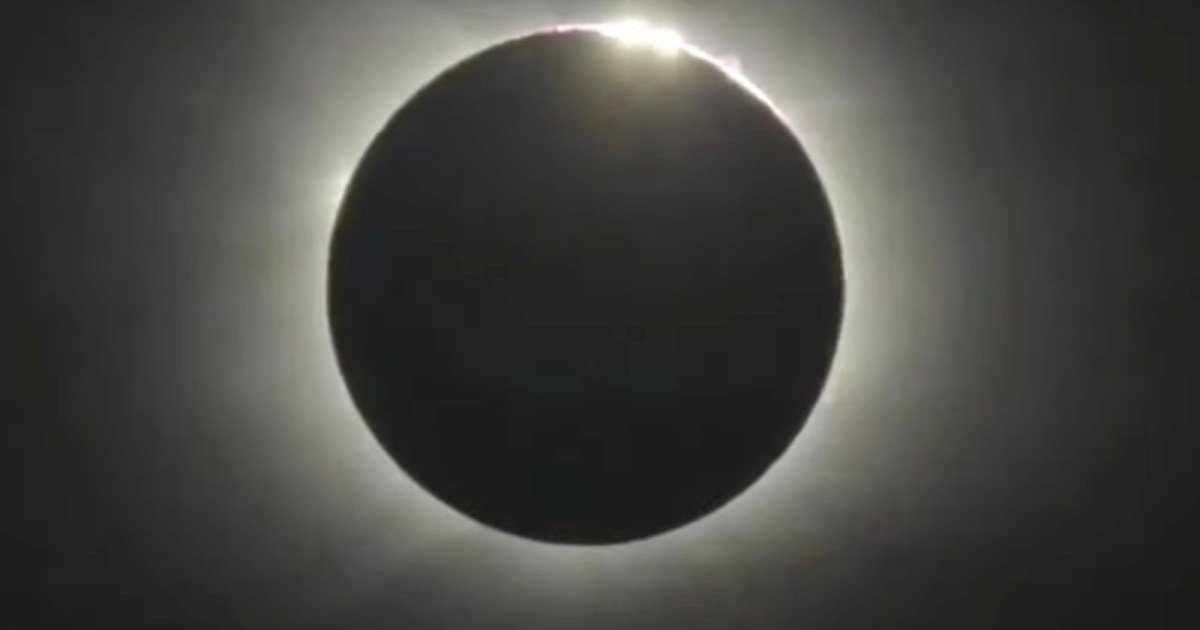
North America is just hours away from Monday’s total solar eclipse when the the moon will come between the sun and Earth, dramatically dimming natural daylight along a 115-wide path of totality from Maine to Texas.
Millions of people are expected to witness the celestial phenomenon, with many making their way from across the U.S. — and beyond — to a place inside the path of totality where the effect of the eclipse will be at its most prominent.
There are a few concerns about the weather, with thick cloud threatening to ruin the show for some folks. The National Weather Service has posted a map of the U.S. that shows the locations likely to have some cloud cover, but people are being advised to check local forecasts for the most accurate and up-to-date information.
If you do have a clear view of Monday’s total solar eclipse, NASA is urging people to view it through proper safety glasses or some similar device. Except for the brief period of totality, looking at the eclipse without protecting your eyes risks causing permanent damage to your sight.
“Eclipse glasses are not the same as regular sunglasses — regular sunglasses are not safe for viewing the sun,” NASA warns on its website. “During a total solar eclipse, you must wear your eclipse glasses (or use other solar filters) to view the sun directly during the partial eclipse phase. You can only take your glasses off during the short time when the moon completely obscures the sun.” An authentic pair of solar eclipse glasses should show the label ISO 12312-2 (sometimes shown as ISO 12312-2:2015), which denotes an international safety standard.
If you haven’t been able to get hold of any eclipse glasses, you can use an indirect viewing method such as a pinhole projector, which projects an image of the sun onto a nearby surface.
The space agency adds: “Viewing any part of the bright sun through a camera lens, binoculars, or a telescope without a special-purpose solar filter secured over the front of the optics will instantly cause severe eye injury.” Tech Reader has some useful tips on how to photograph the solar eclipse using a smartphone.
You’re also recommended to inspect your eclipse glasses or handheld viewer before use, and to discard it if it’s torn, scratched, or damaged in any way.
NASA’s website has full details on how to view the total solar eclipse safely. Now get out there and enjoy it!
Editors’ Recommendations
[ad_2]
Source link


