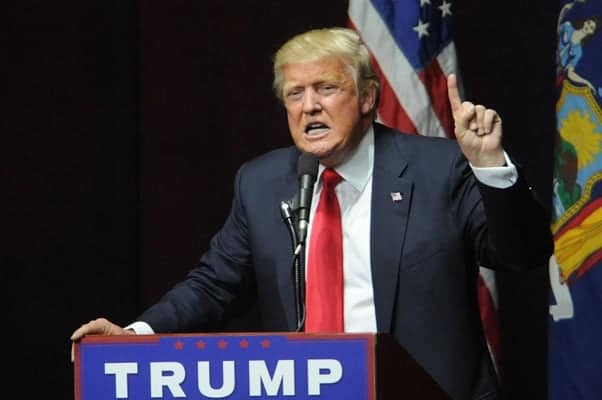
Donald Trump has issued a dramatic 48-hour ultimatum to Iran, warning that the United States will “obliterate” its power plants unless the Strait of Hormuz is fully reopened within two days.
In a late-night post on his Truth Social platform, the President wrote, “If Iran doesn’t FULLY OPEN, WITHOUT THREAT, the Strait of Hormuz, within 48 HOURS from this exact point in time, the United States of America will hit and obliterate their various POWER PLANTS, STARTING WITH THE BIGGEST ONE FIRST!”
This threat escalates tensions following weeks of conflict in the Gulf, where Iran has blocked one of the world’s busiest oil routes and targeted vessels and infrastructure throughout the region.
In response, Iran has already launched missile strikes on southern Israeli cities, including Dimona and Arad, injuring dozens of people, including children.
The attacks hit areas near Israel’s secretive nuclear reactor in Dimona and multiple military installations, including Nevatim Air Base. Israel condemned these strikes as “blatant war crimes” and “pure terrorism.” Israeli Prime Minister Benjamin Netanyahu stated, “This has been a very difficult evening in the battle for our future. We are determined to continue striking our enemies on all fronts.
Since the start of “Operation Epic Fury” on February 28, Iran has maintained its blockade of the 30-mile-wide Strait of Hormuz. This waterway connects the Gulf to the Arabian Sea and is a crucial artery for global energy, carrying around one-fifth of the world’s oil and liquefied natural gas (LNG).
Under normal circumstances, approximately 3,000 ships transit the strait each month. However, since Iran began targeting vessels, that number has fallen sharply, with at least 21 ships reported to have been attacked or blocked.
Iran has approximately 400 power plants, including the Bushehr Nuclear Power Plant and the fossil-fuel Shaheed Salimi Neka Combined Power Plant. Trump did not specify which plant he intended to target first.
Iran has vowed to retaliate against all U.S. energy and desalination infrastructure in the region if strikes occur. Earlier, Trump claimed that Iran had sought a deal after three weeks of war, but insisted that the U.S. would not negotiate: “Their leadership is gone, their navy and air force are dead, they have absolutely no defense, and they want to make a deal. I don’t! We are weeks ahead of schedule.
This threat contributes to fears of a global energy shock, as Brent crude hovers near $119 a barrel, and analysts warn that prolonged conflict could push inflation higher worldwide.


