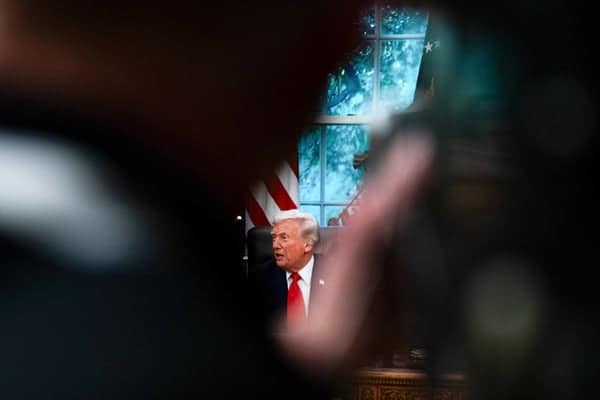
Donald Trump has expressed notable frustration with the United Kingdom’s approach to the escalating conflict with Iran, particularly following Prime Minister Sir Keir Starmer’s reluctance to deploy Royal Navy ships to help reopen the critical Strait of Hormuz.
This waterway is vital for global oil transportation, with an estimated 20% of the world’s oil supply passing through it.
In a recent statement, the US President expressed surprise at Britain’s position, arguing that the UK should take a more proactive role in ensuring the security of this essential maritime route.
Trump has called on his international partners to step up their involvement to prevent a potential global energy crisis, which could arise from disruptions in the Gulf region.
During a press conference at Downing Street, Sir Keir Starmer outlined his administration’s commitment to a negotiated approach with Iran, indicating that British ministers are actively engaged in discussions with the United States, Gulf states, and European allies to explore viable options.
Trump said: “I don’t need advisers to tell me that – I know what it is. You know, the Prime Minister of the United Kingdom yesterday told me: ‘I’m meeting with my team to make a determination’.
“I said: ‘You don’t need to meet with the team. You’re the Prime Minister, you can make [up] your own [mind]. Why do you have to meet with your team to find out whether or not you’re going to send some minesweepers to us or to send some boats?’
“I said: You don’t have to meet with your team’. It’s the same thing here. I can tell you that when this is over, oil prices are going to go down very, very rapidly. So is inflation, so is everything else.”
He added: “I was not happy with the UK. I think they’ll be involved, maybe, but they should be involved enthusiastically,” Mr Trump told reporters on Monday.
“We’ve been protecting these countries for years with Nato, because Nato is us. You can ask Putin. Putin fears us. He doesn’t fear, he has no fear of Europe whatsoever.”
He emphasised, “No decisions have been made,” highlighting ongoing deliberations that weigh both diplomatic solutions and the broader implications of the conflict, particularly for domestic energy prices in the UK.
The Prime Minister recognised the strategic significance of the Strait of Hormuz, describing the complexities of safeguarding shipping in this area as “obviously a difficult question.” He acknowledged the geographical challenges and the associated risks of any military involvement. Sir Keir also confirmed that conversations with the US and other allies are continuing, including a recent dialogue with President Trump, which underscores the close yet complicated relationship between the two nations.
While Sir Keir Starmer aims to navigate the delicate balance between diplomatic efforts and the urgency of regional security, his measured approach may inadvertently heighten tensions with President Trump, who advocates immediate, decisive action by allied countries to secure this key passage. The unfolding situation remains delicate, with implications for both regional stability and global energy markets.


