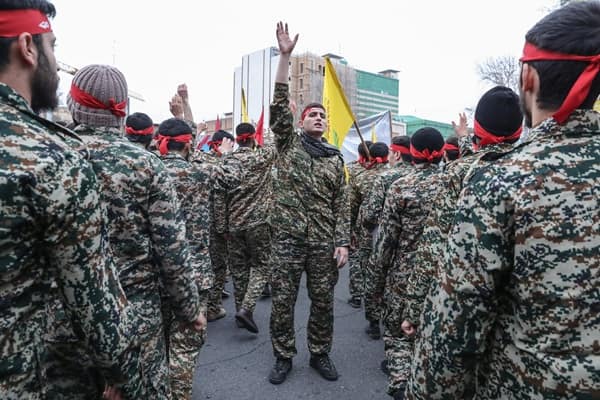
Tehran has issued a stern warning to Israel, threatening new military operations in response to recent airstrikes on Lebanon and indicating that it may withdraw from the fragile US-brokered ceasefire altogether.
A military source speaking to the Fars news agency stated that Iran is “finalising preparations to carry out a deterrent operation against the Zionist regime’s military positions in the occupied territories.”
The same source suggested that Tehran fears either that Washington cannot restrain Prime Minister Netanyahu or that US Central Command (CENTCOM) has effectively given Israel a free hand in the region.
Iranian officials have warned that continued Israeli attacks on Lebanon could nullify the two-week ceasefire. According to the Tasnim news agency, Tehran is “identifying targets to respond” and declared, “If America cannot restrain its rabid dog in the region, Iran will exceptionally help it in this regard — and with force.”
The ceasefire, brokered through US mediation, led to a temporary pause in Hezbollah attacks on northern Israel. However, Israel maintains that the agreement does not extend to Lebanon, launching its heaviest strikes on the country since the conflict escalated last month.
The Israel Defence Forces (IDF) reported a coordinated campaign targeting over 100 Hezbollah command centres and military sites across Beirut, the Bekaa Valley, and southern Lebanon. Israeli Defence Minister Israel Katz hailed the operation as the most concentrated blow against Hezbollah since the September 2024 campaign, which caused widespread destruction.
The Lebanese Health Ministry reported dozens killed and hundreds injured in these attacks.
Israel’s stance has drawn sharp criticism from both Tehran and mediators in Pakistan, who insist that the ceasefire should cover Lebanon. The US, meanwhile, has yet to publicly comment on whether Israel’s actions constitute a breach of the truce.
Analysts warn that the situation remains extremely volatile, with Iran’s threat to resume hostilities adding pressure to a ceasefire that is already strained by conflicting interpretations of its geographic scope. If escalation continues, the fragile pause in the conflict could unravel entirely, raising the risk of a broader confrontation across the region.


