[ad_1]
A US House committee with oversight of NASA unanimously passed a “reauthorization” act for the space agency on Wednesday. The legislation must still be approved by the full House before being sent to the Senate, which may take up consideration later this month.
Congress passes such reauthorization bills every couple of years, providing the space agency with a general sense of the direction legislators want to see NASA go. They are distinct from appropriations bills, which provide actual funding for specific programs, but nonetheless play an important role in establishing space policy.
There weren’t any huge surprises in the legislation, but there were some interesting amendments. Most notably among these was the Amendment No. 01, offered by the chair of the Committee on Science, Space, and Technology, Rep. Brian Babin (R-Texas), as well as its ranking member, Zoe Lofgren (D-Calif.), and three other legislators.
NASA can consider Artemis alternatives
The amendment concerns acquisition powers bestowed upon NASA by Congress, stating in part: “The Administrator may, subject to appropriations, procure from United States commercial providers operational services to carry cargo and crew safely, reliably, and affordably to and from deep space destinations, including the Moon and Mars.”
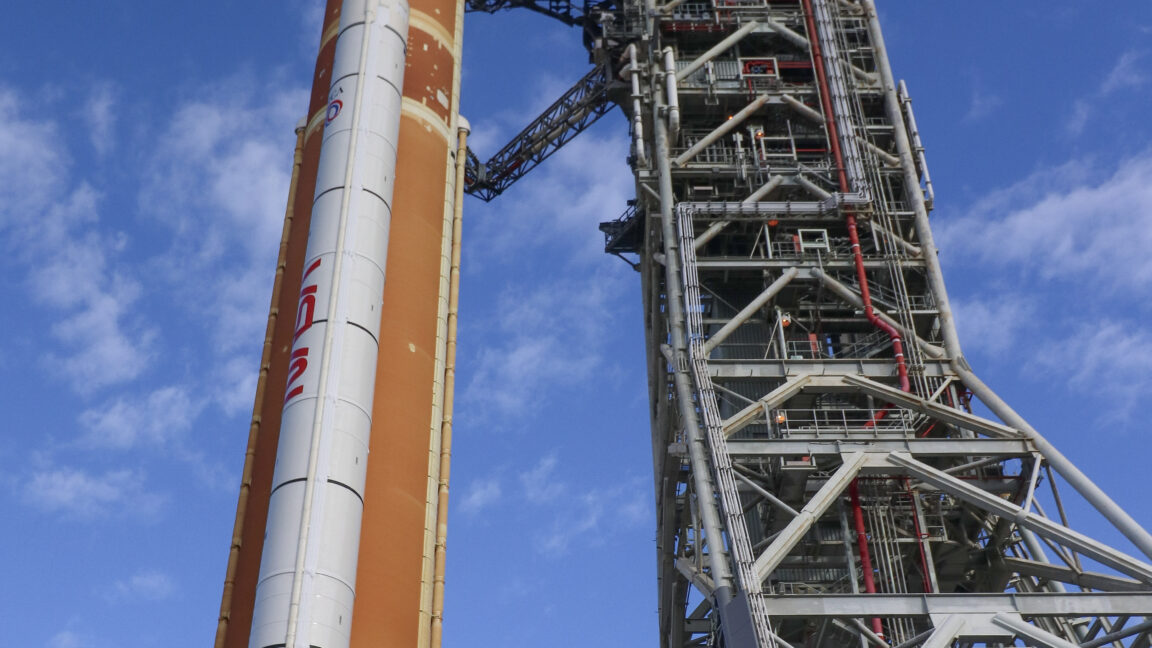
That language is fairly general in nature, but the intent seems clear. NASA’s initial missions to the Moon, through Artemis V, have a clearly defined architecture: They must use the Space Launch System rocket, Orion spacecraft, and a lander built by either SpaceX or Blue Origin to complete lunar landings.
But after that? With this amendment, Congress appears to be opening the aperture to commercial companies. That is to say, if SpaceX wanted to bid an end-to-end Starship lunar mission, it could; or if Blue Origin wanted to launch Orion on New Glenn, that is also an option. The language is generalized enough, not specifying “launch” but rather “transportation,” that in-space companies such as Impulse Space could also get creative. Essentially, Congress is telling the US industry that if it is ready to step up, NASA should allow it to bid on lunar cargo and crew missions.
[ad_2]
Source link


