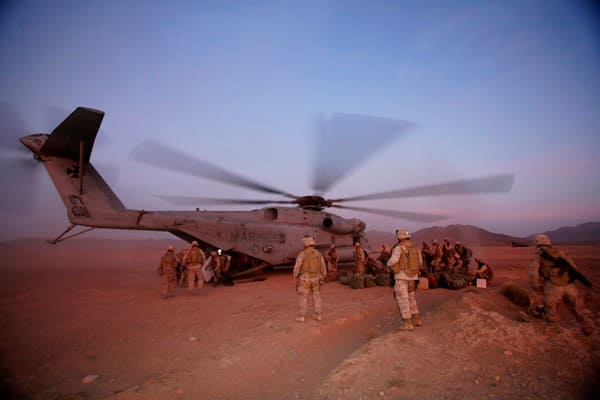
US officials in Washington have formulated comprehensive plans to deploy U.S. Marines to seize control of a series of strategically important small Iranian islands in the Strait of Hormuz.
The White House is considering this military action as part of broader efforts to challenge and reduce Iran’s influence over this vital global energy chokepoint.
The Strait of Hormuz is approximately 30 miles wide and serves as a crucial maritime route through which nearly one-fifth of the world’s oil and liquefied natural gas is transported.
Recently, Iranian military manoeuvres have effectively closed off this waterway, resulting in a significant spike in global energy prices and raising alarms among importing nations.
Seizing these islands, which are positioned at critical points along the strait, would greatly diminish Iran’s ability to control access to the narrow passage. This strategic move could facilitate the restoration of supply flows, providing relief to energy markets and stabilising prices adversely affected by recent disruptions.
Amid this escalating situation, there is increasing pressure for a unified international response to ensure maritime security. The United Arab Emirates has joined forces with 21 other countries—including major players like the United Kingdom, Germany, France, and Japan—to signal their willingness to assist efforts to guarantee safe passage through the Gulf. This unprecedented show of unity underscores the vital role the Strait of Hormuz plays in maintaining global energy security.
Nonetheless, analysts and experts warn that any military intervention carries significant risks, particularly the potential for further escalation in an already tense and volatile region. A direct assault on Iranian-held territory could provoke substantial retaliation from Tehran, complicating not only efforts to stabilise energy markets but also initiatives to maintain secure shipping routes.
As the stakes rise with each passing day, Western leaders face a daunting dilemma: whether to act decisively to reopen the strait and restore normal shipping, or risk a prolonged disruption that could lead to catastrophic economic consequences worldwide. The situation remains fluid, requiring careful navigation through complex geopolitical considerations.


