[ad_1]
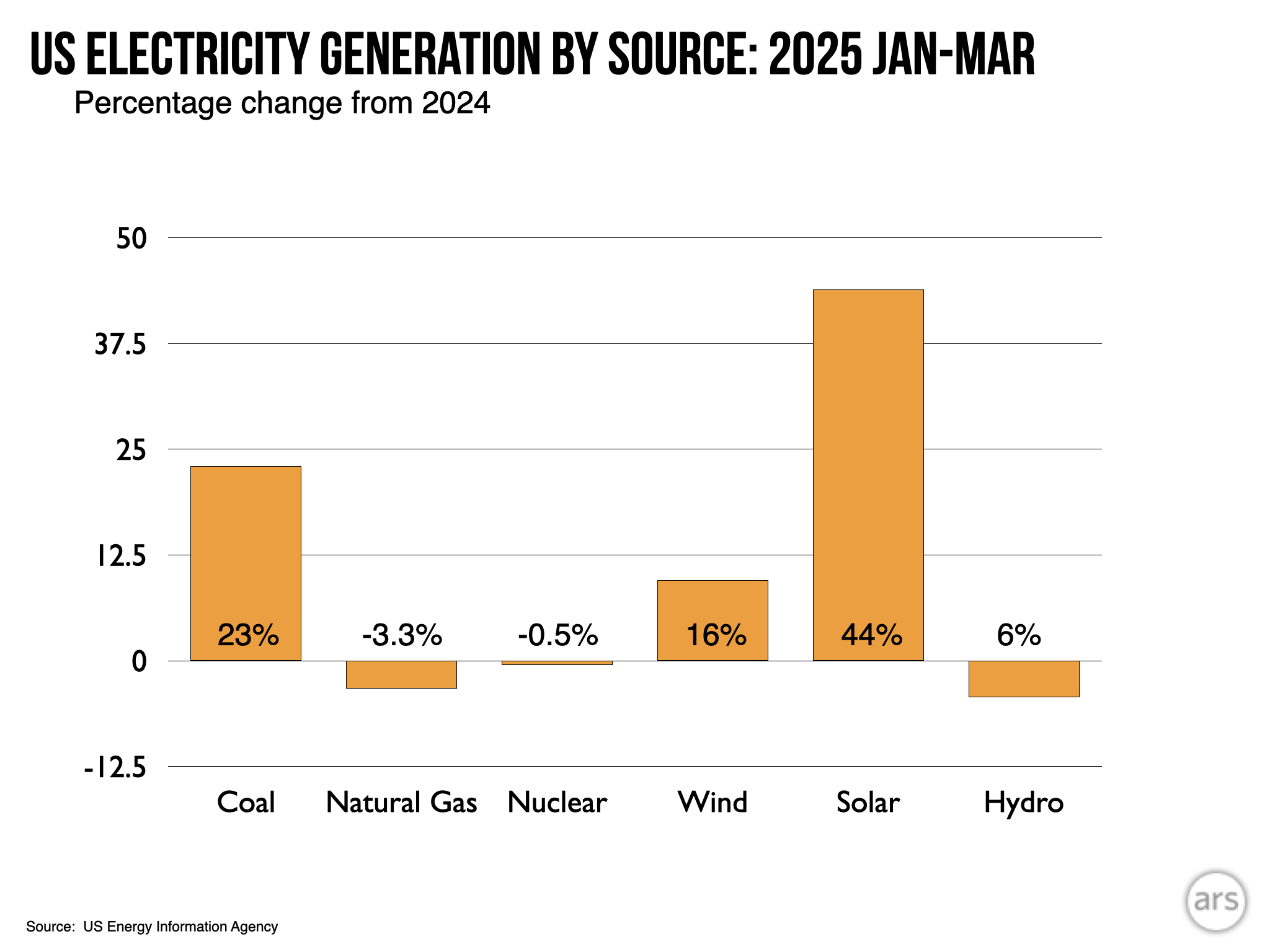
Under those circumstances, the rest of the difference will be made up for with fossil fuels. Running counter to recent trends, the use of natural gas dropped during the first three months of 2025. This means that the use of coal rose nearly as quickly as demand, up by 23 percent compared to the same time period in 2024.
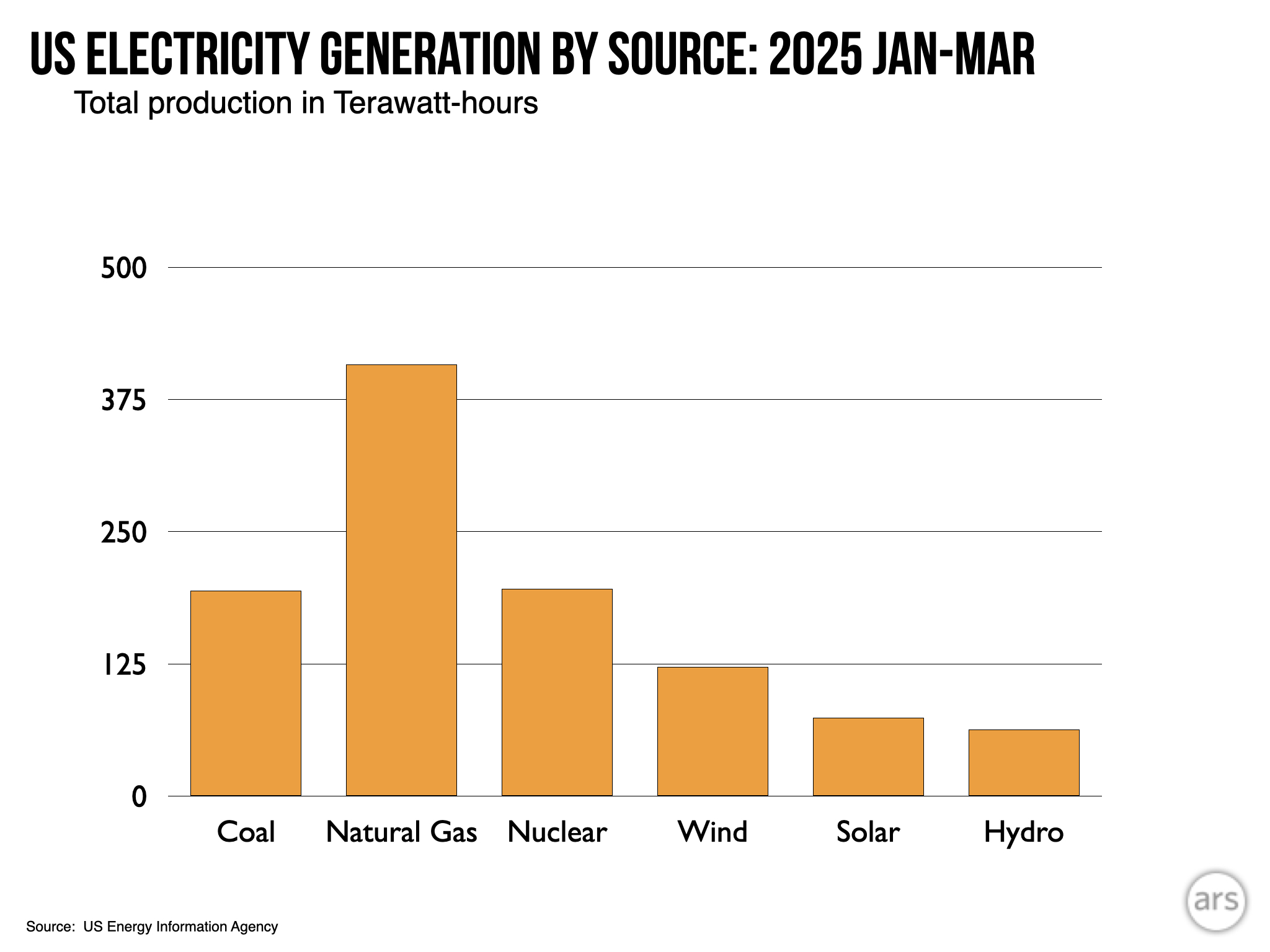
Despite the rise in coal use, the fraction of carbon-free electricity held steady year-over-year, with wind/solar/hydro/nuclear accounting for 43 percent of all power put on the US grid. That occurred despite small drops in nuclear and hydro production.
John Timmer
Solar outproduced hydro, but a significant amount of that production never made it onto the grid.
John Timmer
JOHN TIMMER
Once again, the productivity of solar power is shooting rapidly upward.
JOHN TIMMER
Solar outproduced hydro, but a significant amount of that production never made it onto the grid.
John Timmer
Once again, the productivity of solar power is shooting rapidly upward.
JOHN TIMMER
Solar power also passed a key milestone in 2025, although it requires digging through the statistics to realize it. In terms of power on the grid, there was less solar than hydro. But the Energy Information Agency also estimates the production from small-scale solar, like the kind you’d find on people’s roofs. Some of this never enters the grid and instead simply offsets demand locally (in that it gets used by the house that sits beneath the panels). If you combine the TW-hr produced by small- and grid-scale solar, however, they surpass the production from hydropower by a significant margin.
This surge in solar comes on top of a 30 percent increase in production the year prior. The growth curve is clearly not slowing down.
That dynamic is also not likely to change immediately in response to cuts to tax breaks for renewable power that were part of the budget package passed by the House of Representatives on Thursday, and not only because it’s possible that some Republican Senators might object to budget changes that will harm their states. Solar power in most areas is now cheaper than alternatives, even without subsidies, and any power plant (renewable or otherwise) will likely see its costs rise due to the tariff environment. Finally, the tax breaks don’t expire immediately, and most power plant construction requires significant advanced planning.
All of those factors should continue the solar boom for at least a couple more years before all of the expected changes apply the brakes.
[ad_2]
Source link


