
[ad_1]
The Pentagon said in a statement Tuesday that Guetlein’s office will devise an “objective architecture” for the missile defense shield and “socialize” it by late September. This presumably means sharing some information about the architecture with Congress and the public. So far, Space Force officials have hesitated to provide any specifics, at least in public statements and congressional hearings. They often prefer to describe Golden Dome as a “system of systems” instead of something entirely new.
“Basically, I’ve been given 60 days to come up with the objective architecture. I owe that back to the Deputy Secretary of Defense in 60 days,” Guetlein said. “So, in 60 days, I’ll be able to talk in depth about, ‘Hey, this is our vision for what we want to get after for Golden Dome.'”
Although the major pieces of a layered anti-missile system like Golden Dome may appear obvious to anyone with a casual familiarity with missile defense and space—we just named a few of these elements above—the Trump administration has not published any document describing what the Pentagon might actually achieve in the next three years.
Despite the lack of detail, Congress voted to approve $25 billion as a down payment for Golden Dome in the Trump-backed “One Big Beautiful Bill” signed into law July 4. The bulk of the Golden Dome-related budget is earmarked for procurement of more Patriot and THAAD missile batteries, an increase in funding for SDA’s missile-tracking satellites, ballistic missile defense command-and-control networks, and development of “long-range kill chains” for combat targeting.
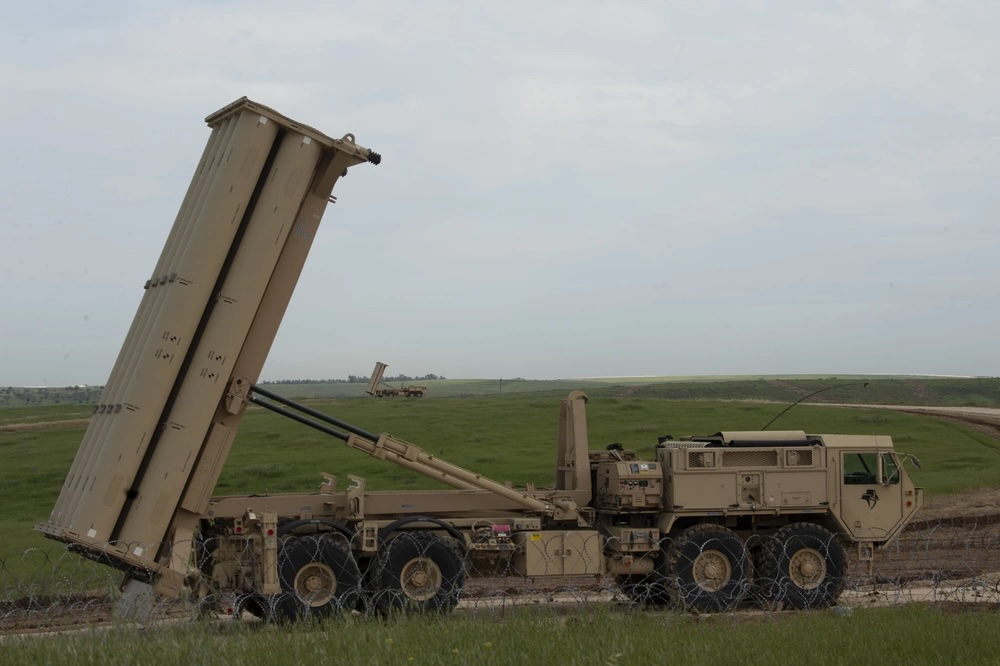
Two of the US Army’s THAAD missile batteries are seen deployed in Israel in this 2019 photo.
Credit:
US Army/Staff Sgt. Cory Payne
So, most of the funding allocated to Golden Dome over the next year will go toward bolstering programs already in the Pentagon’s portfolio. But the military will tie them all together with an integrated command-and-control system that can sense an adversarial missile launch, plot its trajectory, and then generate a targeting solution and send it to an interceptor on the ground or in space to eliminate the threat.
Eventually, military leaders want satellites to handle all of these tasks autonomously in space and do it fast enough for US or allied forces to respond to an imminent threat.
“We know how to get data,” a retired senior military official recently told Ars. “The question is, how do you fuse that data in real time with the characteristics of a fire control system, which means real-time feedback of all this data, filtering that data, filtering out sensors that aren’t helping as much as other ones, and then using that to actually command and control against a large-scale attack of diverse threats.
[ad_2]
Source link


