[ad_1]
Credit:
Allan Cecil
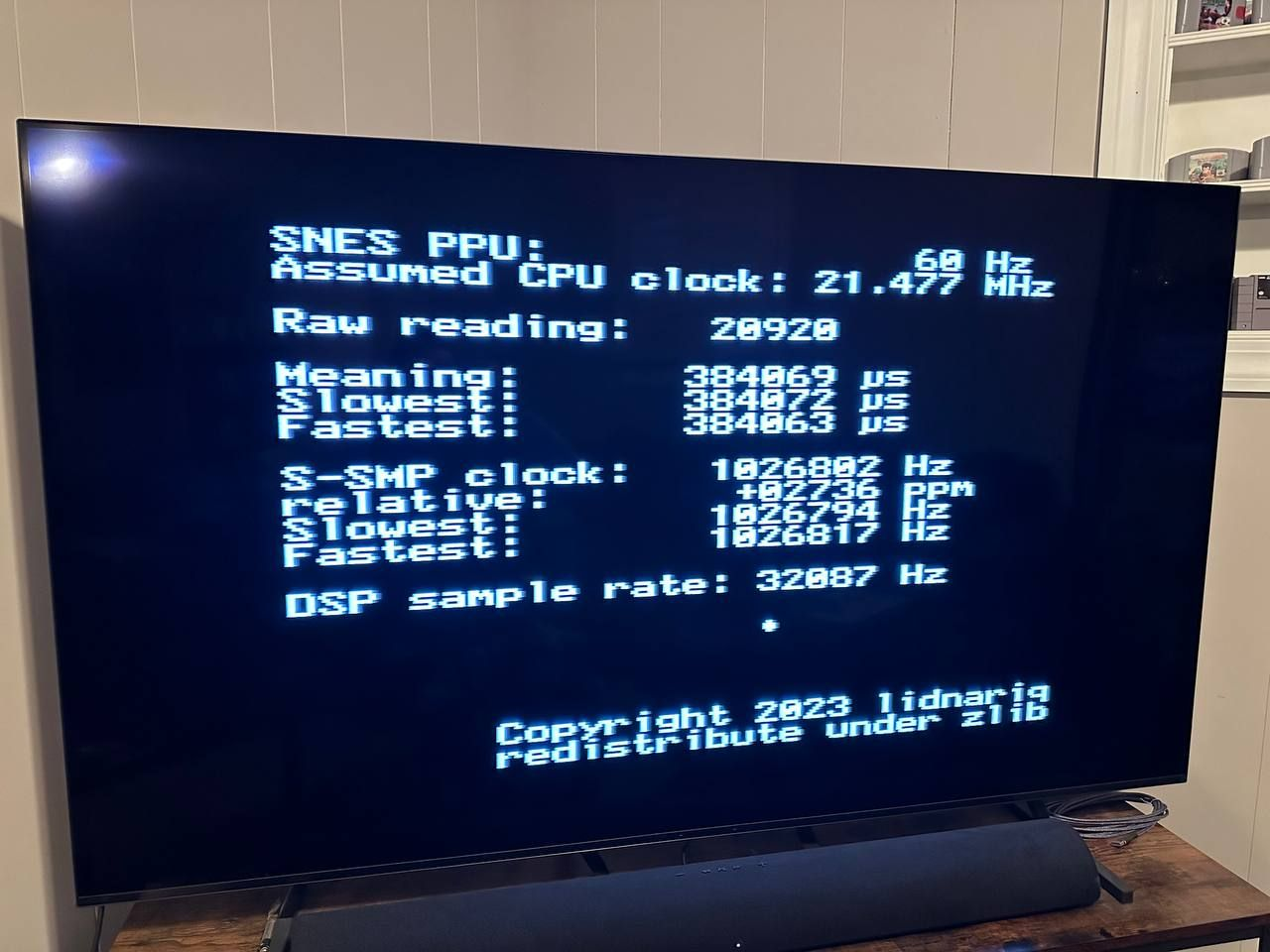
A sample result from the DSP sample test program.
Credit:
Allan Cecil
Those heat effects paled in comparison to the natural clock variation across different consoles, though. The slowest and fastest DSPs in Cecil’s sample showed a clock difference of 234 Hz, or about 0.7 percent of the 32,000 Hz specification.
That difference is small enough that human players probably wouldn’t notice it directly; TASBot team member Total estimated it might amount to “at most maybe a second or two [of difference] over hours of gameplay.” Skilled speedrunners could notice small differences, though, if differing CPU and APU alignments cause “carefully memorized enemy pattern changes to something else” between runs, Cecil said.
For a frame-perfect tool-assisted speedrun, though, the clock variations between consoles could cause innumerable headaches. As TASBot team member Undisbeliever explained in his detailed analysis: “On one console this might take 0.126 frames to process the music-tick, on a different console it might take 0.127 frames. It might not seem like much but it is enough to potentially delay the start of song loading by 1 frame (depending on timing, lag and game-code).”
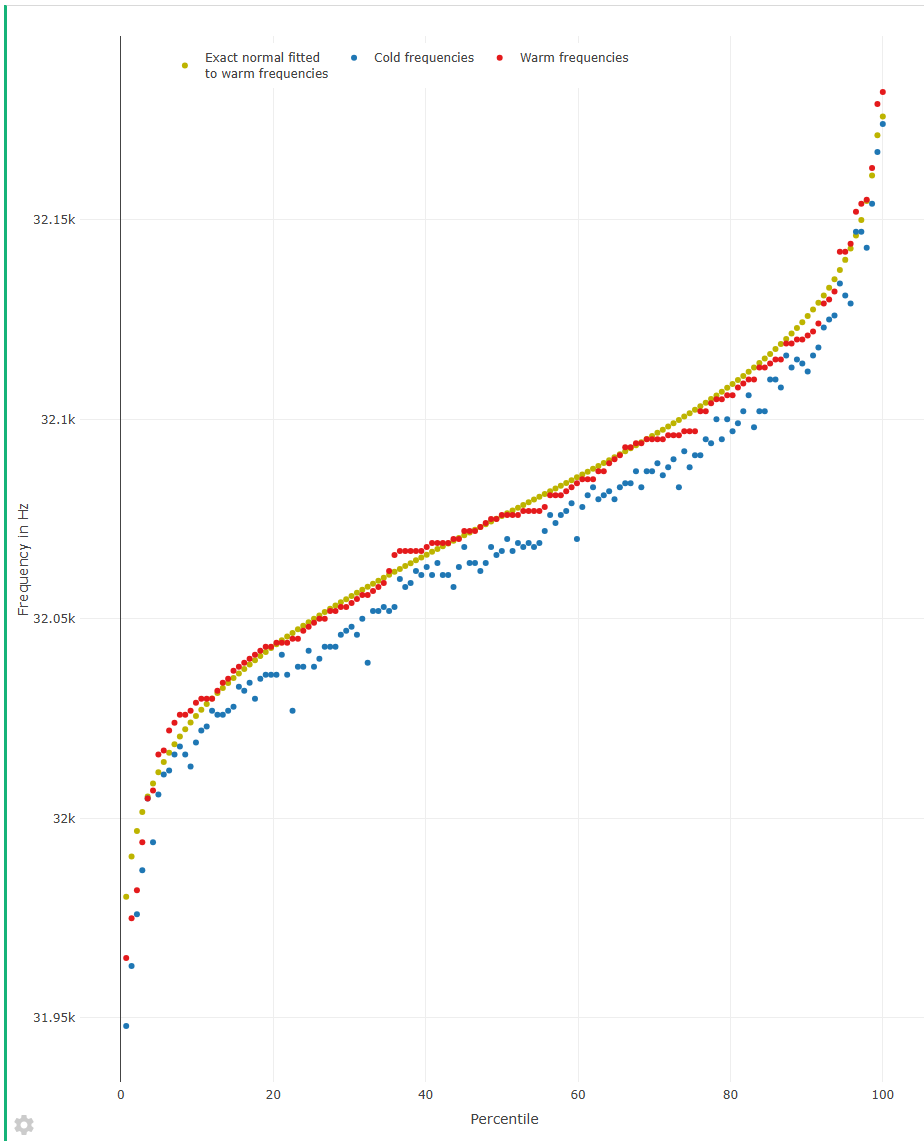
Cecil also said the survey-reported DSP clock speeds were also a bit higher than he expected, at an average rate of 32,078 Hz at room temperature. That’s quite a bit higher than both the 32,000 Hz spec set by Nintendo and the 32,040 Hz rate that emulator developers settled on after sampling actual hardware in 2003.
To some observers, this is evidence that SNES APUs originally produced in the ’90s have been speeding up slightly as they age and could continue to get faster in the coming years and decades. But Cecil says the historical data they have is too circumstantial to make such a claim for certain.
“We’re all a bunch of differently skilled geeks and nerds, and it’s in our nature to argue over what the results mean, which is fine,” Cecil said. “The only thing we can say with certainty is the statistical significance of the responses that show the current average DSP sample rate is 32,076 Hz, faster on average than the original specification. The rest of it is up to interpretation and a certain amount of educated guessing based on what we can glean.”
[ad_2]
Source link


